And as a follow-up to the previous post - Pedigree is donating food to shelters with every "like" and share of their video below.
PEDIGREE® Dog Adoptions. Adopt A Dog With PEDIGREE®'s Adoption Drive
Sunday, April 1, 2012

Monday, February 13, 2012
The AKC's quest for complete irrelevancy continues
“Show me an ad with a dog with a smile; don’t try to shame me,”
This quote by the AKC's director of communications is a typically defensive explanation by the American Kennel Club as to why they ditched Pedigree's heartbreakingly touching commercials featuring shelter dogs getting a second chance. It's been replaced by an upbeat campaign by Purina.
This blog featured the Pedigree commercials a few years ago as part of a general "Adopt A Shelter Dog!" post. I particularly liked Echo, the collie type whose joy in his new home makes me cry like an idiot even now. That was a dog with a smile. Shame on the AKC.
NYT article
This quote by the AKC's director of communications is a typically defensive explanation by the American Kennel Club as to why they ditched Pedigree's heartbreakingly touching commercials featuring shelter dogs getting a second chance. It's been replaced by an upbeat campaign by Purina.
This blog featured the Pedigree commercials a few years ago as part of a general "Adopt A Shelter Dog!" post. I particularly liked Echo, the collie type whose joy in his new home makes me cry like an idiot even now. That was a dog with a smile. Shame on the AKC.
NYT article
Tuesday, September 27, 2011
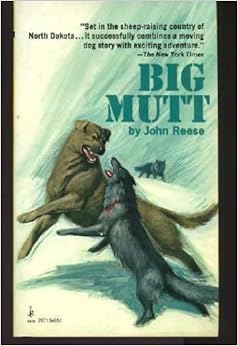
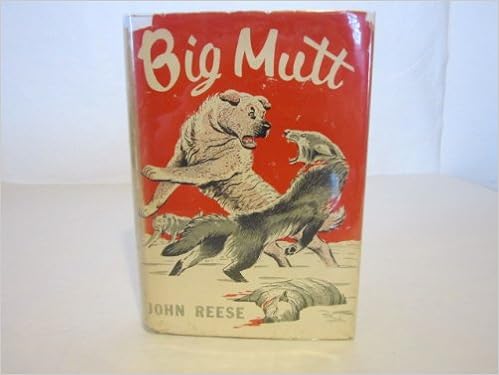 Big Mutt
John Reese, il. Rod Ruth
1952, The Westminster Press
It was not the kindest thing to dump a soft, spoiled, city-raised dog out in this lean sheep country, in the worst blizzard the Northwest had known in a generation.
But they did it.
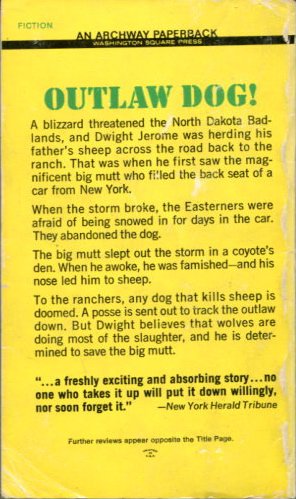
A vacationing New York City couple, spooked by a massive winter storm bearing down on them and tired of dealing with the enormous mutt the wife had adopted as a cute puppy, abandon their dog in the Badlands of North Dakota. In January.
The dog, a mongrel with apparent strains of Great Dane, German Shepherd, and just plain hound, is forced to fend for himself. Unfamiliar with the wild and drawn to humans, he soon begins killing sheep for food. As a brutal winter settles over the landscape, the dog's attacks on their flocks enrage the local shepherds. The situation intensifies as packs of wolves drift south from Canada, which has been hit even harder by the weather, and also begin killing sheep.
"Dwight would have made a good Indian fighter... or a good Indian," he said. "He's more at home with nature than any person I have ever known."
15-year-old Dwight Jerome, son of a sheepman, encounters the big dog early on, when he's still a pet traveling with his Eastern owners. Dwight doesn't forget him, and when a large dog begins killing sheep, he suspects who it is. Already the owner of a large dog - an Irish Wolfhound named Colleen - Dwight is drawn to the big mutt. The dog, he can tell from glimpses of him running wild and from the signs left behind, is the sort of smart, eager hunter he'd wanted when he bought Colleen. And when boy and dog encounter the big stray and a pair of wolves, the fight brings out the hunter in Colleen:
The wolfhound was bred for the show ring, but no one had to tell her what to do now. She had never hunted real wolves. She had never hunted with another dog, and she had never seen this big mutt before. Yet, instead of going to his side, she made straight for the wolves, counting on the big mutt to attack from his side. They worked as a team, instinct responding to instinct.
An old-school dog story, where the boy hero learns to be a man and the wild dog finds his master this is a well-written and fast-paced book with some modern attitudes about the stresses of humans sharing space with wild animals, but a decidedly non-modern attitude about wolves:
Now he knew it was wolves. Not coyotes, but those big Saskatchewan cruisers they used to have here in the old days, when his father was a boy - shrewd, smart, savage killers who could hunt alone or in pairs, or in whole family packs. No more vicious killer lived in nature.
The POV moves effortlessly from dog to boy to the young deputy sheriff who's trying track and kill the dog. Women are generally faceless - Dwight's little sisters, his mother, the pretty schoolteacher. The father - who has a personality, versus his mother - has a final comment on dogs, and the harsh winter:
When the history of this greatest of all storms is written, let no one forget the heroism of the sheep dogs of the West. We know what they've done for us, and we're just a small corner of the land covered by this storm. All over the range country dogs have died this way, cut up by wolves and coyotes and lions, frozen with their flocks, starved when they could have come in without their sheep.
About the Author
1910-1981
John Henry Reese was born in Nebraska and was primarily a writer of Westerns. He wrote a few other books for children, including Three Wild Ones (1963) about a rebellious teenager and a colt.
Links
Wikipedia on Reese
Other editions



Monday, July 19, 2010
Star - An Irish Wolfhound (1959)
Star - An Irish Wolfhound
Janet Rogers Howe
1959, The Westminster Press
"Remember 'way back last summer Pop promised me I could have a big dog if Dr. Bob should get a stray that isn't claimed or one somebody wants to find a home for. I don't care what kind it is as long as it's really huge"
Pete's humorless obsession is rewarded with an Irish Wolfhound through the usual auspices of children's book coincidence. Dr. Bob, the local vet, delivers an unwanted runt from a nearby kennel's prize litter, so choosy little Pete gets his wish for The Very Biggest Dog There Is. Unfortunately for the size-preoccupied boy, the kennel's owned by the mother of a disagreeable classmate, Chuck, who also ends up with a puppy from that litter. And his puppy, a male, is larger. Poor Pete!
... ten energetic young wolfhounds raced and wrestled together. One, a light honey-tan, was taller, longer and more mature-looking than the others. That was Gellert. Pete realized, with a real twinge of regret, that he was bigger than Star.
Pete and his best buddy, Bill, are annoyed by the arrogant and prickly Chuck, who wouldn't be their pal even if he didn't own a larger dog than Pete's. But Dr. Bob wisely sees that the problem is Chuck's overbearing mother, and encourages the boys to bond. Over their wolfhounds.
The writing is fine, the action smooth if not wonderful, and the overall quality is better than average. But there are just a few too many aggravating things. The yawningly familiar plot that a controlling mother is ruining her son, the insistence on reminding us at every turn that these are wolfhounds (she never calls them dogs), the female friend who gets backburnered consistently so that the effect is of an author trying to eliminate every female presence in the book - Pete's mother is dead, Bill's is never seen, Chuck's is an ogre, and Pete's aunt is a crank. The awkwardness of the author trying to have her hunter plot and eat it too by having a father quickly comment that a near-tragic shooting was a natural mistake on the part of a hunter. God forbid she criticize a hunter.
Other Books
Curly (1956)
Benjamin Big (1958, Saint Bernard dog)
The Mystery Of The Marmalade Cat (1969)
The Secret Of Castle Balou (1967)
Thunder And Jerry (1949, horse?)
Trinket (1961, Shetland pony)
Samuel Small's Secret Society (1960)
Janet Rogers Howe
1959, The Westminster Press
"Remember 'way back last summer Pop promised me I could have a big dog if Dr. Bob should get a stray that isn't claimed or one somebody wants to find a home for. I don't care what kind it is as long as it's really huge"
Pete's humorless obsession is rewarded with an Irish Wolfhound through the usual auspices of children's book coincidence. Dr. Bob, the local vet, delivers an unwanted runt from a nearby kennel's prize litter, so choosy little Pete gets his wish for The Very Biggest Dog There Is. Unfortunately for the size-preoccupied boy, the kennel's owned by the mother of a disagreeable classmate, Chuck, who also ends up with a puppy from that litter. And his puppy, a male, is larger. Poor Pete!
... ten energetic young wolfhounds raced and wrestled together. One, a light honey-tan, was taller, longer and more mature-looking than the others. That was Gellert. Pete realized, with a real twinge of regret, that he was bigger than Star.
Pete and his best buddy, Bill, are annoyed by the arrogant and prickly Chuck, who wouldn't be their pal even if he didn't own a larger dog than Pete's. But Dr. Bob wisely sees that the problem is Chuck's overbearing mother, and encourages the boys to bond. Over their wolfhounds.
The writing is fine, the action smooth if not wonderful, and the overall quality is better than average. But there are just a few too many aggravating things. The yawningly familiar plot that a controlling mother is ruining her son, the insistence on reminding us at every turn that these are wolfhounds (she never calls them dogs), the female friend who gets backburnered consistently so that the effect is of an author trying to eliminate every female presence in the book - Pete's mother is dead, Bill's is never seen, Chuck's is an ogre, and Pete's aunt is a crank. The awkwardness of the author trying to have her hunter plot and eat it too by having a father quickly comment that a near-tragic shooting was a natural mistake on the part of a hunter. God forbid she criticize a hunter.
Other Books
Curly (1956)
Benjamin Big (1958, Saint Bernard dog)
The Mystery Of The Marmalade Cat (1969)
The Secret Of Castle Balou (1967)
Thunder And Jerry (1949, horse?)
Trinket (1961, Shetland pony)
Samuel Small's Secret Society (1960)
Sunday, May 9, 2010
Happy Mother's Day!
 A collie with her litter, Album Of Dogs by Marguerite Henry, illustrations by Wesley Dennis.
The short story anthology Seven True Dog Stories by Margaret Davidson, cover by Susanne Suba.

A mutt mother proudly showing off her puppies, Album Of Dogs by Marguerite Henry, illustrations by Wesley Dennis.

A young Irish Setter honoring his mother's point in Marguerite Henry's Always Reddy (aka Shamrock Queen), illustrations by Wesley Dennis.
Sunday, April 25, 2010
Old Arthur (1972)
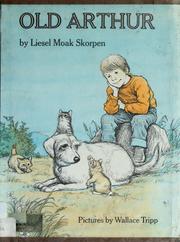
Liesel Moak Skorpen, il. Wallace Tripp
1972, Harper & Row
It was Old Arthur's job to wait for William while William was at school. That old dog was very good at waiting. He had waited all his life.
An old farm dog, unwanted by his owner because he's too old to continue herding the cows and guarding the henhouse, finds a new home with a little boy.
Wagging that woolly tail was the most important job that that old dog did.
A sweet, old-fashioned story of an unwanted dog who faces harsh rejection only to find love with a little boy who, unusually, appreciates the very qualities that others disliked. The illustrations add punch to the story, and ably demonstrate how the love between boy and dog makes the old dog beautiful.
Other books by Liesel Moak Skorpen
All The Lassies
His Mother's Dog
We Were Tired of Living in a House
Outside My Window
Charles
Tuesday, April 20, 2010
The Visitor (1971)
The Visitor
Gene Smith, il. Ted Lewin
1971, Cowles Book Company
"Good-bye, little fellow," the man said. But he said it so softly that his wife and children could hardly hear him - let alone Sassafras, who was already inside the building.
Sassafras, a six-month-old Irish Setter, is left at a kennel while his family goes on a weeklong trip. But when a car accident kills his master during the trip, the widow decides the pup's return home will be too sharp a reminder to their children. She pays the kennel to keep him indefinitely, leaving the poor dog in eternal limbo. The gentle setter never fogets his beloved Home, but takes pity on the homesick dogs around him, comforting and protecting them.
An incredibly sad story, told from the point-of-view of Sassafras, who understands human speech enough to realize that his owner is dead, speaks with his fellow inmates and retains a memory so strong of his home and people that when he sees the kennel owner clean away old bones
Sassafras stopped chewing on his old bone because he did not want it taken away. It spoke to him of home. Instead he carefully put it to one side where he could always look at it.
A horrendously manipulative tear-jerker. And, horribly, based on a true story of an Irish Setter left at a boarding kennel for 13 years. The woman as a shallow monster who leaves the dog in limbo may have been completely true to life, but it stirs up ugly echoes of those old-school dog tales where men are the only gender truly fit for the loyalty and faith of a canine companion, because women are too concerned with clean floors.
Other books
The Hayburners
The Winner - juvenile horse novel (1970)
Nonfiction
When The Cheering Stopped (bio of Woodrow Wilson)
Still Quiet On The Western Front: Fifty Years Later
The Shattered Dream: Herbert Hoover In The Great Depression
Maximilian And Carlotta (bio)
Lee and Grant (bio)
High Crimes & Misdemeanors: The Impeachment of Andrew Johnson
American Gothic: The Story of
The Dark Summer
The Police Gazette (ed., with Jayne Barry Smith)
The Champion (horse)
Subscribe to:
Posts (Atom)