Saturday, February 21, 2015

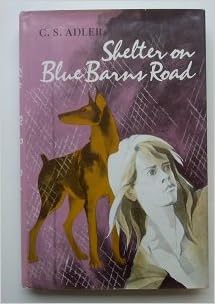
Shelter on Blue Barns Road (1981)


Shelter on Blue Barns Road
C.S. Adler
1981, Macmillian Publishing Co.


Lonely and bored after moving from Brooklyn to rural upstate New York, 13-year-old Betsy discovers the local dog pound is near her new home. She wanders in and is caught by the presence of a Doberman Pinscher.

In the center of one cage stood a sleek black, pointy-eared Doberman with brown fur lining his undersides and half circles of brown above his intelligent eyes. Ears at attention, he watched her intently. His dignity impressed her - the way he stood so quietly.

Betsy has an interesting family. Her father is a former teacher, who was fired.

It wasn't Pops's fault. The kids had driven him out of his mind, so he'd shoved a couple around and used bad language.

Her older brother, 17-year-old Hal, is angry at their father for the upheaval he's caused, but Betsy remains loyal. She knows that her once close bond with him has suffered in part because as she's grown older, she reminds him of his students, who he can't control and who taunt him. He was famous in the school as an easy teacher, one whose students push him to see how far they can go. Betsy's mother, who's also frustrated with the man of the house, has gotten a new job here as a guidance counselor. Betsy feels herself a changeling, who looks nothing like the men in her family and, with 2 teacher parents, bad at school. Feeling dumb, feeling unwanted, she gravitates toward the Doberman when she discovers he's also a freak, an unwanted dog surrendered for biting two people.

His owner died, an old lady who had an appliance store a quarter of a mile down the road from here. She used that Doberman to guard the store nights. He even made the paper once. Two guys broke in, and by the time the police got there, they were chewed up so bad that the police had to take them to the hospital instead of jail.

Betsy's also shocked to discover the animal shelter kills unwanted dogs and cats.

An animal shelter! What a laugh that was. "Animal shelter" for a place that killed dogs. She closed her eyes and tried to find a hiding place inside her head, but the horror crept in after her. She wondered if there were other shelters, if all over the country animals were being "put down" because no one wanted them. The idea sickened her. She got up and began pacing around her bedroom, biting on her knuckles. First, she had to save the Doberman. Then she would see what she could do for those others.

Betsy is baffled that the shelter's two employees, manager Mr. Berrier and 16-year-old kennel worker Bill Wing, seem resigned to the killing. They seem nice, yet they kill dogs and they will, eventually, kill the dog called Zoro.

The plot is more than this - it follows Betsy to her new school and through her father's testy relationship with his family and into Bill's reluctant participation in a drug sale - but it centers on Betsy's outrage at the tragedy of death, and her desperate need to help Zoro. She thinks he needs her, which he does, but since that's true of all the dogs in the shelter, her drive to help him specifically is interesting. In one scene halfway through the book, Betsy comes to the shelter to find Bill leading a gentle old dog to the gas chamber. Two new dogs arrived that morning and this dog has to be killed to make space. Betsy could easily have interceded for this dog, which her parents might well have accepted as a pet (they understandably refuse to let her adopt the violent, dangerous Doberman), but she remains silent as Bill kills him. In truth, her desire to help Zoro is not entirely altruistic.  She looks at that powerful, self-contained dog and sees a power she lacks, and she covets it.

In the end Betsy loses Zoro. The Doberman attacks and mauls a man, and is killed. She stands over his grave and vows.

Someday, she promised herself, when she was grown and had her own home, she'd find a Doberman puppy, black with brown underneath and ears that stuck straight up. She would raise him to love people and she would name him Zoro.

A young teen who has just spent the book alternating between trying to soothe an anxious, angry father (fired for lashing out inappropriately) and bonding with an anxious, angry dog (sentenced to die for lashing out inappropriately), who sees only logistical reasons why it's bad that Zoro lunges for everyone but her - this girl is now vowing to stay the course and stick a pattern of being drawn to powerful, aggressive individuals. It's a troubling ending, although the author probably intended it to be uplifting or motivating. It is, in a sense. Zoro was raised poorly and developed into a dangerous dog because of that. Raising a Doberman puppy well would probably prevent that outcome.  But it's interesting how current this 34-year-old book is in its insistence that the dog, a Doberman, only turned dangerous because of abuse. The Doberman, a breed designed for guard and police work, is innately aggressive and while not every member of the breed is actively dangerous, they pose a much higher risk for aggressive behavior than, say, a Golden Retriever.  With some breeds, you would have to really abuse them to create aggressive behavior and even then, a lot wouldn't show violence. With other breeds, creating aggressive behavior is much easier and can be accomplished just by not actively staying on top of the dog's behavior. Dobermans are one of the latter breeds.

Other issues:
The shelter in the book uses a gas chamber to kill dogs. This method is now on its way out, due to concerns about its effectiveness and humaneness. Many states have both abolished it and banned it in favor of intravenous injection. New York, where this book takes place, requires IV euthanasia.

Of course, euthanizing any shelter dog for any reason is now debated.  Proponents of "no-kill" claim it's the way of the future and the only humane approach to sheltering.  Others express concerns about long-term warehousing of unwanted pets - some dogs at no-kill shelters end up spending their whole lives there, so you'll see ads for "Rex, who's been here since his birth 8 years ago" - and
about the morality of keeping alive physically healthy but dangerously aggressive dogs who can never be rehomed without placing the community at risk. There is also tension as calling your shelter no-kill places a certain inevitable stigma on every other shelter in the area - most of which are supporting you because when a no-kill shelter must turn away unwanted pets due to space, the "kill shelter" has to take them.

Zoro, like most Dobermans in the US, has cropped (stuck straight up) ears. This practice of mutilating and "training" a puppy's ears to increase the sleek, dangerous appearance of various breeds has been banned in Europe, and will probably, eventually, end in the US as well.
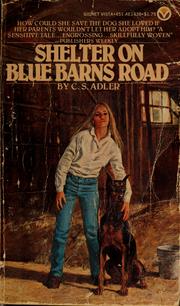


Paperback edition


Links
C.S. Adler's website

Wednesday, October 3, 2012

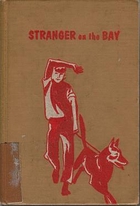
Stranger On The Bay (1955)

Stranger On The Bay
Adrien Stoutenburg
1955, The Westminster Press

The damp sand crunched under Don Spicer's feet as he hurried forward.  Beside him trotted a German shepherd with a harness banding his silver-gray chest and back.  A sandpiper skittered into view at the lake's edge and the dog bounded ahead.

It's July in Minnesota, and 15-year-old Don Spicer is intent on spending the summer (his first at his new home in Loon Lake) redeeming Frosty.  He'd raised the young German Shepherd as a puppy for a guide dog school, but the dog's successful career ended in a fire that left him phobic of smoke.  Don got back his dog, but feels strongly that Frosty needs to return to guiding.

He didn't know how he could bear to let Frosty go again and yet he knew he had to because Frosty wasn't just an ordinary dog.  Frosty had a mission in life and it was up to Don Spicer to see to it that he didn't fail.  The Foundation had put a lot of money and work into making Frosty the right kind of dog to make some blind person happier and freer.  And Frosty himself wouldn't be happy without serving as he had been meant to serve.

Don and his friend Ned also become entangled in a mystery.  Beloved local man "Grandpa" Danniver lost his son in a plane crash in Mexico years earlier; rescuers had found the bodies of the younger Danniver and his wife, but not their five-year-old son, Jude.  And now Jude is back, after years supposedly living with a Mexican family in the wilderness.  But the wary, unfriendly Jude doesn't seem very happy to be reunited with his only family, and the jovial Texan who found him doesn't seem the most trustworthy sort.  And who's the stranger hiding in a cabin in the woods?

This is a mystery story with a strong secondary thread about the rehabilitation of a traumatized dog.  The writing is workmanlike, and does the job, but isn't particularly vivid.  It does evoke the background nicely - the woods and beach and back roads of a rural area near a lake.


About the Author
1916-1982
Stoutenburg was born in Minnesota and eventually moved west.  She worked as a librarian and in publishing, and published her own poetry and children's books.  She wrote many children's books, fiction and nonfiction, as well as several poetry collections.  She co-wrote another dog story, Scannon, Dog With Lewis and Clark, with Laura Nelson Baker.  She also published a book of photos and verse about cats, A Cat Is.

Sunday, April 1, 2012

PEDIGREE® Dog Adoptions. Adopt A Dog With PEDIGREE®'s Adoption Drive

And as a follow-up to the previous post - Pedigree is donating food to shelters with every "like" and share of their video below.

PEDIGREE® Dog Adoptions. Adopt A Dog With PEDIGREE®'s Adoption Drive

Monday, February 13, 2012

The AKC's quest for complete irrelevancy continues

“Show me an ad with a dog with a smile; don’t try to shame me,”

This quote by the AKC's director of communications is a typically defensive explanation by the American Kennel Club as to why they ditched Pedigree's heartbreakingly touching commercials featuring shelter dogs getting a second chance.   It's been replaced by an upbeat campaign by Purina. 

This blog featured the Pedigree commercials a few years ago as part of a general "Adopt A Shelter Dog!" post.  I particularly liked Echo, the collie type whose joy in his new home makes me cry like an idiot even now.  That was a dog with a smile.  Shame on the AKC.

NYT article

Tuesday, September 27, 2011

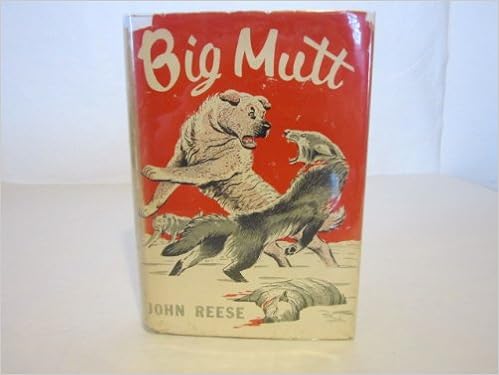
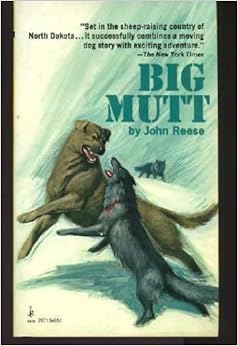
Big Mutt
John Reese, il. Rod Ruth
1952, The Westminster Press


It was not the kindest thing to dump a soft, spoiled, city-raised dog out in this lean sheep country, in the worst blizzard the Northwest had known in a generation.
But they did it.


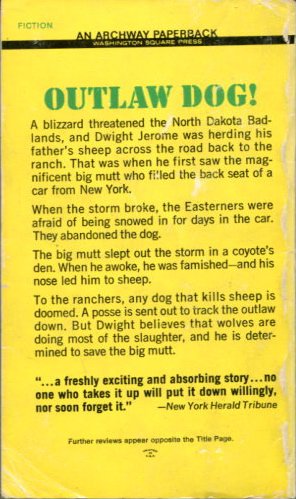
A vacationing New York City couple, spooked by a massive winter storm bearing down on them and tired of dealing with the enormous mutt the wife had adopted as a cute puppy, abandon their dog in the Badlands of North Dakota. In January.

The dog, a mongrel with apparent strains of Great Dane, German Shepherd, and just plain hound, is forced to fend for himself. Unfamiliar with the wild and drawn to humans, he soon begins killing sheep for food. As a brutal winter settles over the landscape, the dog's attacks on their flocks enrage the local shepherds. The situation intensifies as packs of wolves drift south from Canada, which has been hit even harder by the weather, and also begin killing sheep.


"Dwight would have made a good Indian fighter... or a good Indian," he said. "He's more at home with nature than any person I have ever known."
15-year-old Dwight Jerome, son of a sheepman, encounters the big dog early on, when he's still a pet traveling with his Eastern owners. Dwight doesn't forget him, and when a large dog begins killing sheep, he suspects who it is. Already the owner of a large dog - an Irish Wolfhound named Colleen - Dwight is drawn to the big mutt. The dog, he can tell from glimpses of him running wild and from the signs left behind, is the sort of smart, eager hunter he'd wanted when he bought Colleen. And when boy and dog encounter the big stray and a pair of wolves, the fight brings out the hunter in Colleen:


The wolfhound was bred for the show ring, but no one had to tell her what to do now. She had never hunted real wolves. She had never hunted with another dog, and she had never seen this big mutt before. Yet, instead of going to his side, she made straight for the wolves, counting on the big mutt to attack from his side. They worked as a team, instinct responding to instinct.


An old-school dog story, where the boy hero learns to be a man and the wild dog finds his master this is a well-written and fast-paced book with some modern attitudes about the stresses of humans sharing space with wild animals, but a decidedly non-modern attitude about wolves:


Now he knew it was wolves. Not coyotes, but those big Saskatchewan cruisers they used to have here in the old days, when his father was a boy - shrewd, smart, savage killers who could hunt alone or in pairs, or in whole family packs. No more vicious killer lived in nature.


The POV moves effortlessly from dog to boy to the young deputy sheriff who's trying track and kill the dog. Women are generally faceless - Dwight's little sisters, his mother, the pretty schoolteacher. The father - who has a personality, versus his mother - has a final comment on dogs, and the harsh winter:

When the history of this greatest of all storms is written, let no one forget the heroism of the sheep dogs of the West. We know what they've done for us, and we're just a small corner of the land covered by this storm. All over the range country dogs have died this way, cut up by wolves and coyotes and lions, frozen with their flocks, starved when they could have come in without their sheep.

About the Author
1910-1981
John Henry Reese was born in Nebraska and was primarily a writer of Westerns. He wrote a few other books for children, including Three Wild Ones (1963) about a rebellious teenager and a colt.

Links
Wikipedia on Reese

Other editions


Monday, July 19, 2010

Star - An Irish Wolfhound (1959)

Star - An Irish Wolfhound
Janet Rogers Howe
1959, The Westminster Press

"Remember 'way back last summer Pop promised me I could have a big dog if Dr. Bob should get a stray that isn't claimed or one somebody wants to find a home for. I don't care what kind it is as long as it's really huge"

Pete's humorless obsession is rewarded with an Irish Wolfhound through the usual auspices of children's book coincidence. Dr. Bob, the local vet, delivers an unwanted runt from a nearby kennel's prize litter, so choosy little Pete gets his wish for The Very Biggest Dog There Is. Unfortunately for the size-preoccupied boy, the kennel's owned by the mother of a disagreeable classmate, Chuck, who also ends up with a puppy from that litter. And his puppy, a male, is larger. Poor Pete!

... ten energetic young wolfhounds raced and wrestled together. One, a light honey-tan, was taller, longer and more mature-looking than the others. That was Gellert. Pete realized, with a real twinge of regret, that he was bigger than Star.

Pete and his best buddy, Bill, are annoyed by the arrogant and prickly Chuck, who wouldn't be their pal even if he didn't own a larger dog than Pete's. But Dr. Bob wisely sees that the problem is Chuck's overbearing mother, and encourages the boys to bond. Over their wolfhounds.

The writing is fine, the action smooth if not wonderful, and the overall quality is better than average. But there are just a few too many aggravating things. The yawningly familiar plot that a controlling mother is ruining her son, the insistence on reminding us at every turn that these are wolfhounds (she never calls them dogs), the female friend who gets backburnered consistently so that the effect is of an author trying to eliminate every female presence in the book - Pete's mother is dead, Bill's is never seen, Chuck's is an ogre, and Pete's aunt is a crank. The awkwardness of the author trying to have her hunter plot and eat it too by having a father quickly comment that a near-tragic shooting was a natural mistake on the part of a hunter. God forbid she criticize a hunter.


Other Books
Curly (1956)
Benjamin Big (1958, Saint Bernard dog)
The Mystery Of The Marmalade Cat (1969)
The Secret Of Castle Balou (1967)
Thunder And Jerry (1949, horse?)
Trinket (1961, Shetland pony)
Samuel Small's Secret Society (1960)

Sunday, May 9, 2010

Happy Mother's Day!

A collie with her litter, Album Of Dogs by Marguerite Henry, illustrations by Wesley Dennis.


The short story anthology Seven True Dog Stories by Margaret Davidson, cover by Susanne Suba.


A mutt mother proudly showing off her puppies, Album Of Dogs by Marguerite Henry, illustrations by Wesley Dennis.


A young Irish Setter honoring his mother's point in Marguerite Henry's Always Reddy (aka Shamrock Queen), illustrations by Wesley Dennis.